Les sept têtes du dragon vert - la guerre des cerveaux ("The seven heads of the Green Dragon - the War of the Brains") - Teddy Legrand, M.C.O.R. editions 2007

I've read this book from start to bottom almost in one row. I always liked so-called pulp fiction, but this one comes with a twist. This book was published in 1933 in a limited edition and became much sought after. It is said to be much more than a cheap novel, and not only seems to deal with many historical figures from the shadows of secret services as well as from the even more obscure haze of the occult societies after world war 1, as some believe it also carries a secret message. I can understand some very bizarre scenes, coincidences galore, the presence of a large amount of mysterious figures and the prophecy of the impending apocalypse that would become world war 2 gave this book a cult following. The word Illuminati is never used, but the author talks of mysterious characters with higher powers, in a dark period of our history where occult figures and organisations definitely had an impact on European politics, the most famous being Rasputin.
It was republished in 2007. This book is a facsimile edition. All page numbers are preceded and followed by a lozenge. Strangely, on page 143 some unreadable, geometric signs surround the page number…
As it has never been translated to English, I summarized the book.
From the introduction:
This book deals with the proceedings of both the secret services and hermetic organisations in Europe from the 1900s till 1933, building up towards the nazi takeover. Above all the this web of conspiracies, the author claims another even more secret organisation pulled the strings and reorganised the geopolitical maps of Europe. Legrand himself, probably a pseudonym of writer Pierre Mariel (who mainly wrote on esoteric subjects), is the main character and as such the book appears as a romanticised autobiography written as a pulp novel. It seems most of the German intelligence operations during the first world war had their homebase in Sweden, where Germany and the young bolsheviks worked together.

Rasputin might have been an instrument of the revolution. In his autobiography, prince
Yusupov, Rasputin's murderer, claims the latter had told him he was counseled by secretive persons, most of whom lived in Sweden and who called themselves 'The Green'.

For Legrand, both nazism and communism are aspects of the same conspiracy. After the murder of the imperial family in 1918, attorney Sokolov was appointed to find the truth, and he concluded German intelligence was active in both the tsarist and the bolshevik camps. In a strange quirk of history, the tsarina had adopted the Asian symbol of the swastika as her personal signature… some of which were discovered drawn by her on the walls of Ipatiev house, the Romanov's prison in Tobolsk before their execution.
It seems the same symbol was used in communication with the tsarina by an organisation who claimed to try to liberate the imperial family. The leader of this organisation,
Boris Soloviev, was Rasputin's son-in-law and was also a triple agent for the German secret service. He was welcome amongst revolutionaries as wel as in contra-revolutionary circles. Maybe Germany first backed up the bolsheviks, needing peace in the East during the first world war, and then tried to re-establish the tsar after they had won some battles in the West. Soloviev fooled the tsarist camp by pretending to work on the liberation of tsar Nicolai II and his family, while he was actually delivering all of its supporters to the bolsheviks. For Sokolov there was no doubt Soloviev worked for the Germans. Now if German intelligence had built a conspiracy so large as to direct both the Russian revolution and the tsarist reaction, what can we imagine about their influence in the rest of Europe?

French occultist
Gérard Encausse (aka 'Papus') co-wrote a series of articles in the interbellum denouncing a large financial syndicate, who was behind most recent troubles in France (starting with the Dreyfuss affair) and in Russia. According to him, behind every conflict, hidden agents made these conflicts unavoidable. He mentions the part the Freemasons had in the French revolution, but also the Jesuits and the Carbonari in other conflicts. Every time a small group tries to achieve total domination. At the dawn of the 20th century, power was expressed in gold; as such a secret financial syndicate tried to get its hands on most of the gold reserve in the world. Allegedly, both France and Russia opposed these goals, hence both nations were attacked until they weakened. For Papus, the centre of this organisation was in London, while important branches operated from Germany.
Teddy Legrand wrote what appears as a classical mystery novel, with parts based on historical facts and others obvious tricks to help the plot unfold. Because of these the adventures of Teddy Legrand and his British friend James 'Nobody' 's appear quite bizarrely incoherent at times, even at the point of seemingly mocking the reader. Maybe by rejecting the plot elements of a classical novel the writer's goal was to help get a hidden message across?
In the end Legrand hints at an asiatic conspiracy behind the Anglo-German one. Two mysterious historical figures cross their paths: first the jewish spy and adventurer
Trebitsch-Lincoln, a man at home in most of Europe's esoteric circles and who played a part in the organisation of German nationalism, appears under the name of lama Dordji-Den. He was a member of Hitler's inner circle in the twenties, when the 'National Socialist Party of German Workers' tried but failed to overthrow the government of Bavaria.
Another character, 'The man with the green gloves', probably stands for
Erik Jan Hanussen, the most famous esoterist in Berlin between the two world wars, who was murdered later on in 1933. A devotee of Asiatic and tantric traditions, he was close to certain nazi officials. Let's not forget this book was published in 1933, and deals mainly with the work of a political, criminal and esoteric organisation whose main goal was to take over Europe. The author show knowledge of historical facts, of which some were corroborated by recently discovered documents.
Chapter 1. The picture and the icon.

The story starts when Legrand comes home from a mission to find out his appartment has been visited. Luckily the only genuine photographs of the Ipatiev house, taken shortly after the murder of the Romanovs by Legrand himself, had not been found. As a fan of Edgar Allan Poe he had hidden them in plain sight, at the back of pictures in his family album. He had tried to save the tsar and his family, dressed up as a cook in the Tchecoslovakian army in Siberia. Later on he had taken the disguise of an orthodox pope. That's when he took the famous pictures and received an icon of
Saint Seraphim of Sarov which had belonged to the Tsarina.
He's visited by an old friend, a colleague of the British secret services, James 'Nobody', a self-assured red-faced Englishman who reminds him of Mr. Pickwick. He was named by jealous colleagues after Homeros' tale, but also after captain Nemo, whose name also means no one. Nobody admits he was the uninvited visitor, and it is vital he could compare a photograph taken by Legrand with what he thinks, and indeed appears, to be a forgery, taken later and used in attorney Sokolov's official files. Topped by a swastika, which by then only had a vague asiatic meaning, linked to the Bouddha, there are minor differences between the two pictures.

To Nobody, the original one is the true testament of the tsarina: drawn on a wall with a pencil, below the swastika is written '17/30 A.u.p. 19-18?' and he claims he can find a way to decipher the message, but for this they need to meet the Patriarch of Constantinople, Basileus III. He also has a surprise for Legrand, walking about in his appartment, holding his arm, wary of any twitch in his muscles which would give away that Legrand would know about it; which he doesn't. So Legrand is genuinely surprised when Nobody takes the icon of Saint Seraphim of Sarov and removes the halo above his head: showing behind it a message carved in silver, obviously by the hand of the Tsarina:
"S.I.M.P. :.:. The green dragon. You were absolutely right."
and below, carved by a man: "Too late". Nobody wonders what the strange double three points mean and thinks of a masonic symbol.But to Legrand who knows a lot on hermetic matters it's the seal of Salomon.

And hence this message has to do with Martinism, a sect that played a major part in the French revolution, which was allegedly dissolved, but Legrand thinks their influence never really stopped before being refounded by Papus in 1890, at the same time as Sâr Péladan refounded the Rosy Cross. S.I.M.P. stands for 'Supérieur Inconnu, Maître Philippe', pointing at
Nizier-Anthelme Philippe, a common butcher who joined the
Martinist order and became a famous healer and magnetizer. Master (or Magus) Philippe, while considered an ordinary con man by some, others saw him as the reincarnation of Christ. He had been introduced to the imperial family when they had visited France and had had a prominent influence on Russia's destiny, before Grigori Raputin took over.
Chapter 2. Fener.
Legrand and Nobody leave for
Fener, the residence of the Orthodox
patriarch Basileus III in Istanbul and the main center of conspiracies during world war 1. In the train, Nobody recalls his visit to prince Yusupov who had said that once Rasputin mentioned his hidden Swedish masters to him. According to Legrand indeed, the Staretz received lots of telegrams signed 'The Green', but their true identity was never revealed. Maybe Master Philippe had tried to warn the tsarina for the dangers of the Green Dragon, personnified by the one who replaced him to the court, Grigori Rasputin. And maybe she had realized - 'Too late' - that he was right.
All archives of the Orthodox church had been gathered in Istanbul even before the war and the revolution, and so it seems they knew more about what was at stake.
Arriving in Istanbul, Legrand realizes the Vatican and the Fener or Phanar could not differ more: the first is a huge palace filled with richness and harmoniously built; the second is a labyrinth of corridors and passageways, closed in from the outside. They meet the Archimandrite Theophanes who claims the patriarch is a bit ill and cannot see them. They fear Theophanes simply won't admit he's dead or dying. Later on, dressed up as two abbotts from
Mount Athos, coming for the soon to be held elections for a new Patriarch, they manage to enter the Phanar and are given a room to rest.

At night they visit the cellar and finally discover a miserable room where the Patriarch has been left to die in grim circumstances. He gets a little boost of energy when he recognizes Legrand, who once helped him. They show him the icon of Saint Seraphim of Sarov and Basileus III starts a strange rant. He had hoped to receive this message a long time ago, when the imperial family was still alive. According to him, no one but the tsar had the power to stop the impeding apocalypse directed by the seven-headed green Hydra, with Raputin as its puppet. Russia seems the only safeguard for Europe against the forces from Asia. The Patriarch ends his rant by saying (and again, let's not forget this was published in 1933!) that "Europe shall shiver under the sharp spurs of the man with the two Z "(to the reader, an obvious reference to Hitler; not so to Nobody and Legrand when they hear it).
The door opens and they're discovered while the Patriarch finally dies. They manage to flee to the streets and have themselves arrested by the police to escape an angry mob. In police headquarters they meet up with colonel Ibrahim Bey of the Ottoman intelligence, an old friend of Legrand who sends them by train to Andrinopolis in Rumania to escape the forces of the Phanar.
Chapter 3. Orient Express.

On their way to Bulgaria in the Orient Express, they realize they're being followed by two tugs from the Phanar. Luckily for them these are arrested at the border, probably courtesy of Ibrahim Bey. Looking out of the window waiting for the train to leave they wittness a bizarre scene: on the platform young beautiful people surround in prayer a character dressed up as a bishop who turns out to be a gorgeous woman.
Mariavism, a bizarre sect started by a bishop Kowalski in Poland, mixing mysticism with eroticism, organised orgies and used most of the catholic attributes as a mockery, had left Poland after Kowalski had been condemned in Plock on account of too many mystical brides. It seems the mariavites wanted to try their luck in Bulgaria now. Discussing the matter, Legrand defends the ideas of
Towianski whom Nobody compares to Kowalski. Legrand calls the first 'the prophet of our times'… which gives away to Nobody the fact that Legrand is a member of the A:. de S:. lodge, a very small and secret group.
They discuss the meaning of Basileus' soliloquoy. For Legrand, most of it was gibberish. Not so for Nobody: he thinks every word was full of meaning, but simply hidden behind some far-fetched allegories. They first analyze what they can understand: for the Patriarch, all political events are connected. The world is controlled by mysterious forces, at the origin of the two Sarajevo murders leading up to world war 1, they're behind the murder of the Romanovs, the murder of Rathenau and so on. They're the same people mentionned by both Master Philippe and by his successor Rasputin. Nobody and Legrand have no idea what the Patriarch meant by saying
"As old as the son of Helles might be, sitting on his golden rock, he's still hungry"
and
"and the time will come when Europe shall shiver under the sharp spurs of the man with two Z"
.
Suddenly the female bishop enters their compartment. They're both troubled by the erotic atmosphere surrounding elements of the catholic lithurgy. The woman appears to be Irma Staub, Nobody's nemesis and the best spy of the German intelligence. She tells them she knows about the vital information from the Phanar. She implores them to listen to her as there isn't much time: a little further up the rails, the train shall have an accident meant to cause their death; they need to jump off the train just before reaching the bridge over the Maritza river. Legrand believes her and wants to pull the alarm, but too late: the train derails and he's knocked out by flying luggage.
Later on, Legrand wakes up, shaken by Nobody. He has a slight injury to the head. They are surrounded by debris and the bridge is gone. The locomotive and the first four wagons have crashed deep down in the valley where the torrent Maritza flows surrounde by horrible cries of suffering. They're surrounded by bodies and teams trying to offer rescue. Later on, a paranoid fool of Sofia would claim the responsability for the terrorist attack. Obviously insane, he's sent to a lunatic asylum. For Legrand, it's obvious he and Nobody were meant to die in the accident, and that the real culprits would remain in the shadows. They manage to get the heavily injured Iram Staub in a hotel in Philipopoli, as they trust no hospitals given the circumstances, and have found a trustworthy doctor to take care of her. While in great pain, and fearing for her life, she talks to them both about how she had sworn to revenge her murdered lover
Walther Rathenau.

Rathenau, an extremely wealthy jewish industrial, member of the highest capitalistic class and the true leader of Germany, whom she had been assigned to spy upon by the Kaiser, claimed to know what was wrong with the world and wanted desperately to heal the European economy. She had finally fell in love with and his ideals. His influence on the matters would have been decisive, as the leader of a small group of wealthy financiers who opposed the powers of 'The Greens'. In his mind, the people of Israel were meant to play a major role in order to bring the entire human race towards world peace and back into an new Golden Age. He was brutally murdered on the 16th June 1922. The German justice concluded it was an act of some Pangerman extremists and that was it. Irma had fled the Reich and joined the British Intelligence Service, realizing too late they were part of the conspiracy too. She says to Legrand and Nobody that after the death of Basileus, only one man remains who could give them the information they need.
Part 2
Chapter 1. The Intelligence Service.
6 months later, Irma, fully recovered, promotes the ideas of Ghandi in India and Nobody and Legrand discuss at home the strange occurrence of the number 72 every time they gather some cryptic information concerning 'The Greens'. A highly kaballistic number, it reminds of the secret 72 names of god, of the 72 languages spoken in the tower of Babel, of the 72 angels ruling the Zodiac according to the Zohar…

On the 25th of January 1930 they visit a small appartment in the suburbs of Paris to meet general
Alexander Kutepov, the sole leader of the White Russians who remained faithfull to the throne, and the keeper of the tsarist mystique. In the salon, his spouse, a young slavic woman tries to convince them the general would never agree to see them.

In a loud voice, Legrand asks her to tell the general the 7th seal is about to be broken. Immediately, a door opens and Kutepov, silent, waits for more. Nobody says the three of them have the power to subdue the 72 bastards. On a sign of the general his wife leaves the room. Legrand tells him he took photographs of the real messages of the tsarina shortly after the murder of the Romanovs. With an increasing curiosity, the general receives both the icon of St Seraphim of Sarov, especially worshipped by the tsar, and the photograph taken by Legrand in Ipatiev house. After a knock on the door, having quicly hidden both, he's visited by a man named Igor whom they dislike immediately. Kutepov asks Igor to prepare a meeting as some secrets concerning the murder of the imperial family is about to be revealed. When Igor leaves, the general admits he doesn't trust him either but he has been imposed to him. From a small library he moves a few books and takes out a small oblong booklet in red leather. It appears the Romanovs had imagined a secret code, just for fun, even before they were married. Later on this code became vital to communicate with the remaining faithfull. They actually had developped two cyphers, one that was known to their familiars and one that remained secret even to Raputin. Kutepov holds the second cypher's codebook in his hands. After deciphering the message he says
"So then it would be the Greek as well? Incredible! This man is the Antechrist!"
. But then a heavy step is heard in the hallway and he quickly makes an appointment with Legrand and Nobody for the next day at 16hrs. Igor walks in.
The next day, they drive towards their meeting, when suddenly a scooter comes out of nowhere hitting their car. The driver lays on the floor, yieling like a pig, and soon they are surrounded by a crowd who looks like a bunch of thugs ready to lynch them. Luckily for them, a policeman appears, sending the seemingly injured (but Legrand thinks otherwise) driver to a hospital and takes them to the police headquarters. From there they call the hospital, and as they expected the man from the accident never got there; what's more, the scooter had been stolen and all the so-called witnesses have disappeared. They leave the police at 16.10 and hurry to the rendez-vous but find no sign of Kutepov. Later on newspapers would give all kinds of hypotheses concerning the disappearance of general Kutepov. Nobody is convinced the Intelligence Service is behind the abduction.
On the 1st of February they unexpectedly receive a clue: in a sealed enveloppe, and even before it hit the stores, Legrand got the last edition of the illustrated addition to 'Le Petit Journal', an extremely conformist publication, with usually naive engravings. This edition shows a landscape in Caux and a grey automobile beneath a caption that might be understood to those who know, as a hidden reference to the abduction of Kutepov. Legrand knows someone who works for the magazine, a strange and reclusive fellow and initiate who had introduced him to some secret societies. He visits him. The man swears he hadn't send him the enveloppe but when Legrand is about to leave, he tells him how he regrets his work withheld him from a vacation, especially towards the beautiful lighthouse of Ailly.
So Legrand and Nobody pay a visit to the guardian of the lighthouse in Ailly, a man called Jagu Duhamel. It takes them a long time and lots of alcohol to make him talk; knowing he hates his neighbor, Nobody says she had told them he might have known nothing after all. Duhamel immediately reacts vehemently that she lied to them when she said he was drunk when he saw what he saw; and what he saw was the boat of his brother-in-law Emile Guérin who had moved to England with his sister, navigating illegally in French territorial waters; and intuitivelly Legrand knows for sure this has to do with Kutepov. According to Duhamel, since then his brother-in-law has started to spend a lot of money.
A few days later they meet Emile and Hortense Guérin in a pub in London. It takes them only some money to make him talk about what happened that night: he was fishing outside of his legal territory, along the French coast in front of St-Valéry-en-Caux, when he met a motorized boat whose occupants asked him to be towed to England, untill they reached a white yacht with three sails waiting for them nearby Serk. For this he received a large sum of money. He couldn't see the name of the yacht but remembered he had seen it before under Scandinavian or Baltic flag. And he recalls there was a man on board who moaned a lot.
Chapter 2. On board of the Asgärd.

Nobody and Legrand, dressed up as American businessmen from the Chicago Machine-tool Corporation, thanks to their friend JC Parker, member of the American secret services and vice-chairman of the company, are on board of the Asgärd, a white yacht with three sails, owned by Baron Otto von Bautenas, counselor of the Lithuanian Republic and wealthy financer. On board are also Elsa Erikson, Bautenas' wife and the prima donna of the Royal Opera of Oslo, and the reclusive 'Swedish match king' the industrial
Ivar Kreuger.
Bautenas is one of the richest men in the Baltic area, and with his shaved head and crude appearance he looks exactly like a barbarian kosak; yet he can be a quite refined gentleman. The yacht sails from Malmoe, Götesborg, Fredrikshald and Christiansund in direction of Stavanger. Every time the boat stops its occupants go for a little walk on the shore, except for Kreuger who remains on board at alll times to sent a large amount of messages through the radio. A strange man, thin and nervous, he has been a friend of Bautenas for years, who's obviously very fond of him and who tries to give him all he might need. The three other passengers dislike him. Yet sometimes the silent man joins the conversation and when he does, he appears to be a brilliant speaker, with new and intelligent ideas about European politics and the ways to keep the peace. When the yacht passes the Harbanger fjord, Bautenas, exceptionally accompanied by Kreuger, goes to visit the Rosmesholm cave. Legrand stays and seduces Elsa; while Nobody, feigning an attack of paludism, searches the boat for clues. He discovers a coin with in front a bearded figure surrounded by the hebraic Yod and Tschinn, and in the back more hebraic text. Legrand immediately recognizes a so-callled 'coin of Trajan', said to have been made shortly after the death of Christ, and a sign of recognition amongst early Christians. As this medal never left Kutepov, given to him by
Paul Sedir, the founder of Christian group who uses this coin as the symbol of their community, they are certain the general has been kept prisoner on board of the yacht. They deduce that Bautenas is one of the 72 and their priority now is to make him talk, as Kutepov has probably died some time ago. It also becomes obvious to them that Bautenas means to subdue the powerful industrial Kreuger, who could counter the plans of 'The Greens' with his pacifist ideals.
Chapter 3. A duck hunt.

Nobody feigns a new attack of paludism and the Asgärd stops in Stockholm where he's brought to a hospital. It's a trick to get in touch with Vera Petrovna Vassiliev, a member of the White Russians and her crew, who have sworn to avenge Kutepov. Dressed as a nurse, she listens to Nobody telling them everything he knows about the Echinocactus Williamsii or Peyote. One of its effects besides the hallucinations is that all thoughts are expressed in a total confession. The British laboratories have long ago analysed peyote and have not only distilled mescaline and peyotline but lophophorin as well, the most potent truth-serum ever discovered. And Nobody carries a bottle with him.
Suddenly healed, Nobody insists to Bautenas to organize a duck hunt, which he gladfully does. Bautenas' Mercedes brings the party, with the exception of Kreuger who stays on board for business as usual, to the shores of Lake Moelar. One month after the abduction of Kutepov, Legrand and Nobody, together with Elsa and Baudenas are in the middle of wild territories. An owl calls three times, for Elsa a bad omen; for Nobody and Legrand a pre-arranged signal. Three little huts have been build for the hunters. Elsa let the three pick straws to decide whom she'd join - and of course she let Legrand win. While they're making love in his cabin, they hear Nobody and Bautenas shooting. Suddenly Elsa stands up: Bautenas' Winchester has stopped shooting for quite some time. Fearing her adultery to be discovered, she runs to his hut, only to discover he's gone. A search party gives no result.
Later on Elsa would end up marrying Kreuger. And in a Leningrad asylum, lead by the famous professor Pavlov, a madman wearing number 3008, who has obviously been tortured horribly, remains disfigured in his cell. In his blood remains have been found of lophophorin. Kutepov had been avenged.
Chapter 4. The man with the green gloves.
Dressed up as artist painters, Nobody and Legrand stay in Cavalière on the South coast of France. In their home they try to decipher the extensive transcript of Bautenas' confessions, actually more of a continuous flow of consciousness under influence of the drug they gave him. One passage mentions that 'The Green' recognize their brothers by showing a Theu-Threng, a buddhistic rosary used by lamas during the chanting, consisting of 110 bone slices.
This brings Legrand back to his youth, when he was sent undercover in the French Anthroposofic movement. For him, Rudolf Steiner had started the movement as a schism from the British-lead Theosophy first as a Pangerman reaction, uniting several small hermetic fractions in Germany against the Anglo-Saxon hegemony. Back then he infiltrated the movement and had climbed to the highest grade. He was a regular at the 'Villa Bleue' in Nice, where the highest figures of the occult movements, real initiates as Gurdjieff, ran into the most unreliable charlatans of the time. All were welcomed by the gullible countess who held spiritual meetings in her house.

One of those characters could have fitted in both categories: the so-called lama Dordji-Den who claimed to have been initiated in the monastery of Sera near Lhassa. They sympathised, and in exchange for rather useless information on French submersibles he had taught Legrand about the Tibetan attributes of a lama, from the trident Doung Khatan to the Khangling, a small trumpet made from human bone, to the robe (called Zen) and the way to wear it, to especially the Theu-Threng, made from exactly 108 slices of different human skulls used while chanting the mantra Um Mane Padme Hung ('Oh the juwel in the lotus'). Legrand is striken by the different amount used by 'the Green', which might have easily been overlooked; so they start to look for two rosaries they couild alter. A first attempt at Alexandra David-Neel's residence fails, when a friend of Legrand who just got back from Chorten-Nyama provides them with perfectly altered copies. Irma Staub gives them the last information they need.

In Berlin, a melting pot of occult groups, where almost everyone deals with astrologers, sorcerers and mages they try to meet an utmost secretive man who is only known by his monniker given by journalists: 'the man with the green gloves' who had became famous by his exact predictions. Dressed up as London bankers, they wait in a luxurious salon, surrounded by eastern antiques. When an asiatic butler asks for their cards, they depose the two Theu-Threngs in the silver plate. A few minutes later, the time necessary to count the bone slices, they're received by an authoritarian man wearing long green gloves, with a cruel emotionless look and who remains absolutely motionless. They hear him talk but don't see his lips move:
"So the City has finally come to terms as to where her real intrests lay and has send me her ambassadors? Please tell me what you desire".
In a few words they make clear that the City, the general term for England's highest finance, want to negotiate a cooperation. Suddenly the man's lips move and he says:
"Tomorrow at 6 o'clock you'll meet the man with the two Z's!"
PS.
I found no trace online of those 'coins of Trajan'. Neither of the "A.: the S.: lodge", only that Mickiewicz, Towianski's successor was a member of both Martinist lodges the Philomaths and the Philaretes. And as far as I know never wrote a sequel called "The man with the two Z's", but a Jean Robin wrote "
Hitler: l'élu du dragon" which strangely seems to start where this story ends, mentioning Irma Staub, Rathenau and the 72 hidden leaders of the world.
After finishing the above summary, I found an excellent analysis of the novel in
New Dawn Magazine: Behold the Green Dragon"The identification of the Green Dragon as a fundamentally mystical order most evidently appears in Trevor Ravenscroft’s 1973 The Spear of Destiny. It is not insignificant that Ravenscroft was a follower of Anthroposophy and its founder Rudolf Steiner, and his book is a distinctly Anthroposophist take on the nefarious occult forces behind Hitler and his Nazi Regime. Ravenscroft firmly connects the Green Dragon to German geo-politician and mystic Karl Haushofer, one of Hitler’s presumed spiritual mentors."
"The major problem with all this is that Ravenscroft’s sources are hazy or non-existent. He likely took a cue from the 1960 work of Louis Pauwels and Jacques Bergier, The Morning of the Magicians."
"In his 1989 The Unknown Hitler, Wulf Schwarzwaller claims that Haushofer was a master of various Eastern mystical traditions and “had familiarised himself with the Zen teachings of the Japanese Society of the Green Dragon."
"All in all, the Green Dragon sounds like another version of the infamous Illuminati who haunt so many conspiracy theories."


 Rasputin might have been an instrument of the revolution. In his autobiography, prince Yusupov, Rasputin's murderer, claims the latter had told him he was counseled by secretive persons, most of whom lived in Sweden and who called themselves 'The Green'.
 For Legrand, both nazism and communism are aspects of the same conspiracy. After the murder of the imperial family in 1918, attorney Sokolov was appointed to find the truth, and he concluded German intelligence was active in both the tsarist and the bolshevik camps. In a strange quirk of history, the tsarina had adopted the Asian symbol of the swastika as her personal signature… some of which were discovered drawn by her on the walls of Ipatiev house, the Romanov's prison in Tobolsk before their execution.
 French occultist Gérard Encausse (aka 'Papus') co-wrote a series of articles in the interbellum denouncing a large financial syndicate, who was behind most recent troubles in France (starting with the Dreyfuss affair) and in Russia. According to him, behind every conflict, hidden agents made these conflicts unavoidable. He mentions the part the Freemasons had in the French revolution, but also the Jesuits and the Carbonari in other conflicts. Every time a small group tries to achieve total domination. At the dawn of the 20th century, power was expressed in gold; as such a secret financial syndicate tried to get its hands on most of the gold reserve in the world. Allegedly, both France and Russia opposed these goals, hence both nations were attacked until they weakened. For Papus, the centre of this organisation was in London, while important branches operated from Germany.
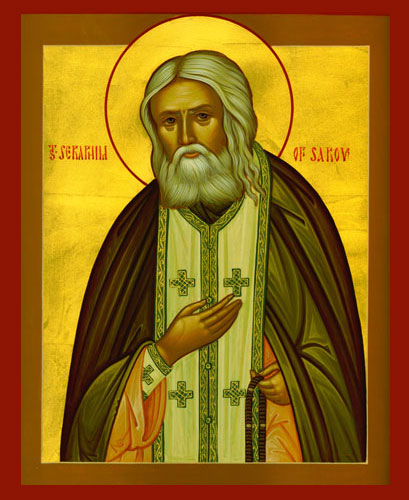 The story starts when Legrand comes home from a mission to find out his appartment has been visited. Luckily the only genuine photographs of the Ipatiev house, taken shortly after the murder of the Romanovs by Legrand himself, had not been found. As a fan of Edgar Allan Poe he had hidden them in plain sight, at the back of pictures in his family album. He had tried to save the tsar and his family, dressed up as a cook in the Tchecoslovakian army in Siberia. Later on he had taken the disguise of an orthodox pope. That's when he took the famous pictures and received an icon of Saint Seraphim of Sarov which had belonged to the Tsarina.
 And hence this message has to do with Martinism, a sect that played a major part in the French revolution, which was allegedly dissolved, but Legrand thinks their influence never really stopped before being refounded by Papus in 1890, at the same time as Sâr Péladan refounded the Rosy Cross. S.I.M.P. stands for 'Supérieur Inconnu, Maître Philippe', pointing at Nizier-Anthelme Philippe, a common butcher who joined the Martinist order and became a famous healer and magnetizer. Master (or Magus) Philippe, while considered an ordinary con man by some, others saw him as the reincarnation of Christ. He had been introduced to the imperial family when they had visited France and had had a prominent influence on Russia's destiny, before Grigori Raputin took over.
 At night they visit the cellar and finally discover a miserable room where the Patriarch has been left to die in grim circumstances. He gets a little boost of energy when he recognizes Legrand, who once helped him. They show him the icon of Saint Seraphim of Sarov and Basileus III starts a strange rant. He had hoped to receive this message a long time ago, when the imperial family was still alive. According to him, no one but the tsar had the power to stop the impeding apocalypse directed by the seven-headed green Hydra, with Raputin as its puppet. Russia seems the only safeguard for Europe against the forces from Asia. The Patriarch ends his rant by saying (and again, let's not forget this was published in 1933!) that "Europe shall shiver under the sharp spurs of the man with the two Z "(to the reader, an obvious reference to Hitler; not so to Nobody and Legrand when they hear it).
 Rathenau, an extremely wealthy jewish industrial, member of the highest capitalistic class and the true leader of Germany, whom she had been assigned to spy upon by the Kaiser, claimed to know what was wrong with the world and wanted desperately to heal the European economy. She had finally fell in love with and his ideals. His influence on the matters would have been decisive, as the leader of a small group of wealthy financiers who opposed the powers of 'The Greens'. In his mind, the people of Israel were meant to play a major role in order to bring the entire human race towards world peace and back into an new Golden Age. He was brutally murdered on the 16th June 1922. The German justice concluded it was an act of some Pangerman extremists and that was it. Irma had fled the Reich and joined the British Intelligence Service, realizing too late they were part of the conspiracy too. She says to Legrand and Nobody that after the death of Basileus, only one man remains who could give them the information they need.
 On the 25th of January 1930 they visit a small appartment in the suburbs of Paris to meet general Alexander Kutepov, the sole leader of the White Russians who remained faithfull to the throne, and the keeper of the tsarist mystique. In the salon, his spouse, a young slavic woman tries to convince them the general would never agree to see them.
 In a loud voice, Legrand asks her to tell the general the 7th seal is about to be broken. Immediately, a door opens and Kutepov, silent, waits for more. Nobody says the three of them have the power to subdue the 72 bastards. On a sign of the general his wife leaves the room. Legrand tells him he took photographs of the real messages of the tsarina shortly after the murder of the Romanovs. With an increasing curiosity, the general receives both the icon of St Seraphim of Sarov, especially worshipped by the tsar, and the photograph taken by Legrand in Ipatiev house. After a knock on the door, having quicly hidden both, he's visited by a man named Igor whom they dislike immediately. Kutepov asks Igor to prepare a meeting as some secrets concerning the murder of the imperial family is about to be revealed. When Igor leaves, the general admits he doesn't trust him either but he has been imposed to him. From a small library he moves a few books and takes out a small oblong booklet in red leather. It appears the Romanovs had imagined a secret code, just for fun, even before they were married. Later on this code became vital to communicate with the remaining faithfull. They actually had developped two cyphers, one that was known to their familiars and one that remained secret even to Raputin. Kutepov holds the second cypher's codebook in his hands. After deciphering the message he says
  Nobody and Legrand, dressed up as American businessmen from the Chicago Machine-tool Corporation, thanks to their friend JC Parker, member of the American secret services and vice-chairman of the company, are on board of the Asgärd, a white yacht with three sails, owned by Baron Otto von Bautenas, counselor of the Lithuanian Republic and wealthy financer. On board are also Elsa Erikson, Bautenas' wife and the prima donna of the Royal Opera of Oslo, and the reclusive 'Swedish match king' the industrial Ivar Kreuger.
 Nobody feigns a new attack of paludism and the Asgärd stops in Stockholm where he's brought to a hospital. It's a trick to get in touch with Vera Petrovna Vassiliev, a member of the White Russians and her crew, who have sworn to avenge Kutepov. Dressed as a nurse, she listens to Nobody telling them everything he knows about the Echinocactus Williamsii or Peyote. One of its effects besides the hallucinations is that all thoughts are expressed in a total confession. The British laboratories have long ago analysed peyote and have not only distilled mescaline and peyotline but lophophorin as well, the most potent truth-serum ever discovered. And Nobody carries a bottle with him.
 One of those characters could have fitted in both categories: the so-called lama Dordji-Den who claimed to have been initiated in the monastery of Sera near Lhassa. They sympathised, and in exchange for rather useless information on French submersibles he had taught Legrand about the Tibetan attributes of a lama, from the trident Doung Khatan to the Khangling, a small trumpet made from human bone, to the robe (called Zen) and the way to wear it, to especially the Theu-Threng, made from exactly 108 slices of different human skulls used while chanting the mantra Um Mane Padme Hung ('Oh the juwel in the lotus'). Legrand is striken by the different amount used by 'the Green', which might have easily been overlooked; so they start to look for two rosaries they couild alter. A first attempt at Alexandra David-Neel's residence fails, when a friend of Legrand who just got back from Chorten-Nyama provides them with perfectly altered copies. Irma Staub gives them the last information they need.


