Webring

Member of the NEW TRAJECTORIES webring

Friday, July 30, 2010

MLA meeting 2010 in Oxford

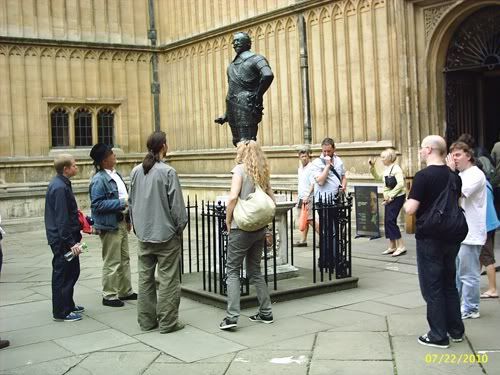
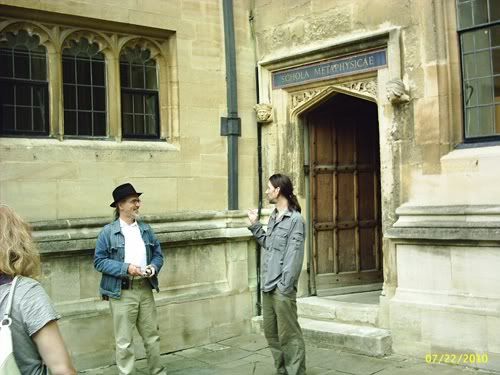
From the 22nd till the 25th of July 2010, 9 members of the Maybe Logic Academy met in Oxford.

Day one

I left Bruges at 5:58. After some waiting in Brussels, the Eurostar left packed with people (and gave me the impression these trains were build for pygmies or people without legs). Arrived in London St. Pancras at 9ish local time and walked further towards Holborn to meet up with Tons. From there we went to grab a bite near the British Museum, where Nonprophet joined us. The Atlantis bookshop was still closed, so NP took us to see the John Dee display in the British Museum. Apparently NP had a bit of an argument with mr. Dee in his previous incarnation as a professional deceiver. Counterfeiting letters, lawsuit and all that. No surprise then that mr. Dee tried to hide his treasures for us. To no avail: NP's detecting skills soon showed us one of the most ancient magickal artefacts: the mysterious obsidian scrying mirror used for divination by John Dee and his medium Edward Kelly. Actually obsidian looks a lot like bachelite. And that's what it was, an antecolumbian telephone with the Otherworld.


"John Dee’s mirror originated in Mexico and was brought to Europe between 1527 and 1530 during the time of the conquest of Mexico by Cortés. Mirrors of this type were used by Mexican priests for divination. Tezcatlipoca the Mexica god of rulers, warriors and sorcerers, was connected to this practice. The Aztec Tezcatlipoca figure can be found in former Mesoamerican cultures as divine beings worshipped by the Olmec and Maya. The name Tezcatlipoca translates to mean Smoking Mirror. Tezcatlipoca is depicted with a mirror either as his right foot or on his chest, the mirror is named Itlachiayauhque which translates as the place from which he watches."

From Scrying, catoptromancy & John Dee's mirror
As a sidenote, Edward Kelly was killed in 1595 while trying to escape from a prison in Prague. Which might be the place for the meeting next year…

After the museum we were warmly welcomed by Geraldine, the owner of the Atlantis bookshop, who had graced us with a memorable hermetic tour of London during the RAW Memeorial in 2007.
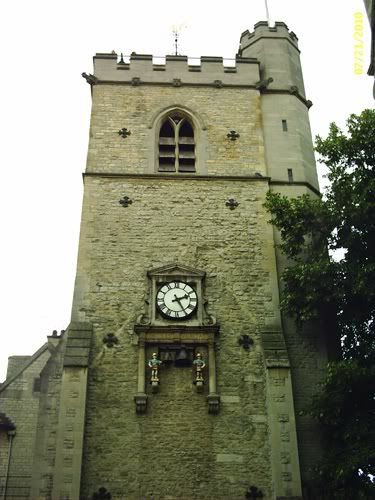

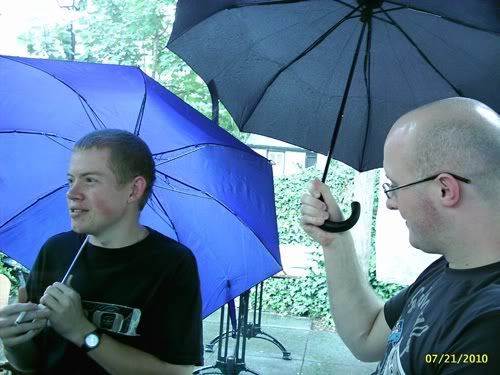
We left London and caught the Oxford coach at noon, and we arrived in Oxford High Street at about 1:45 PM, passing by Bogus, Chris, the Purple Gooroo and Fuzzbuddy on the sidewalk and just in time to catch the rain, probably a result of some dark ritual involving burning dolls by Chris.
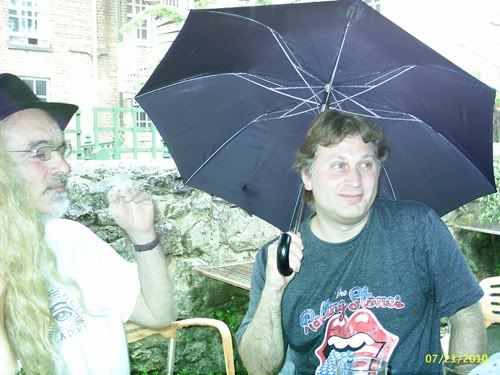


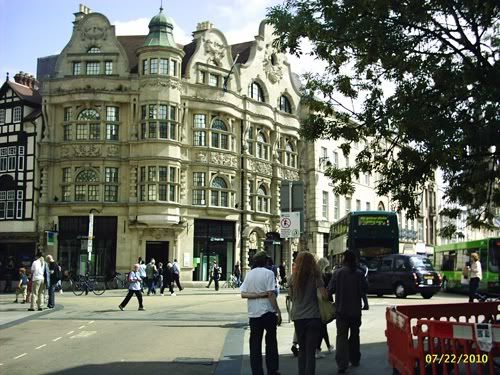
We arrived at the hostel and were able to leave our bags and started to explore Oxford under the expert guidance of The Purple Gooroo. Who has been living in Oxford since six years.


Psychogeographical map of Oxford

View Oxford MLA meeting 2010 in a larger map

I started to grow a pinhead when we finally ended in the Turf tavern for a nice evening beer, a pub where we would end up daily sooner or later. And where we finally met up with Diclonius and Fly.

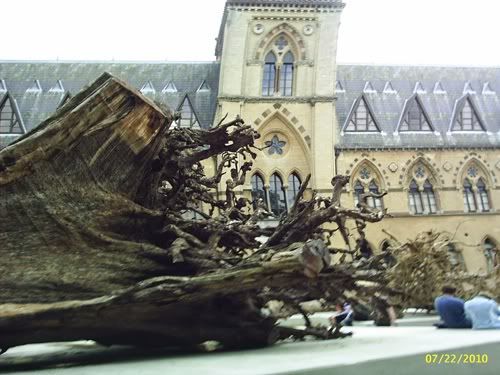
Together we went past Trinity College to visit the Pitt Rivers Museum, in front of which was a massive display of dead trees.


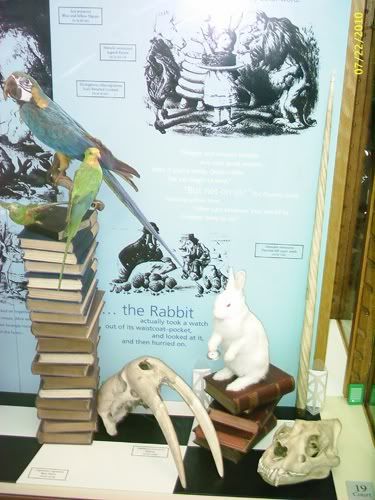
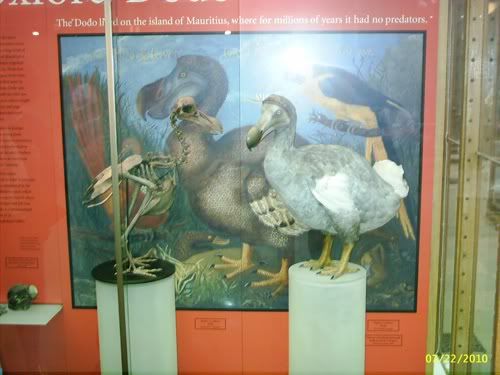
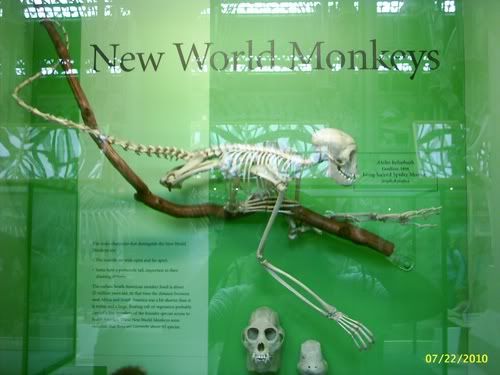
Inside the museum we were welcomed by some fabled creatures inside the Museum of National History.
From left to right: the bloodthirsty rabbit from the Aaaaaaargh cavern, the dodo which inspired Carrolls 'Through the looking glass' and one of our demonic ancestors, the Beelzebuth monkey.
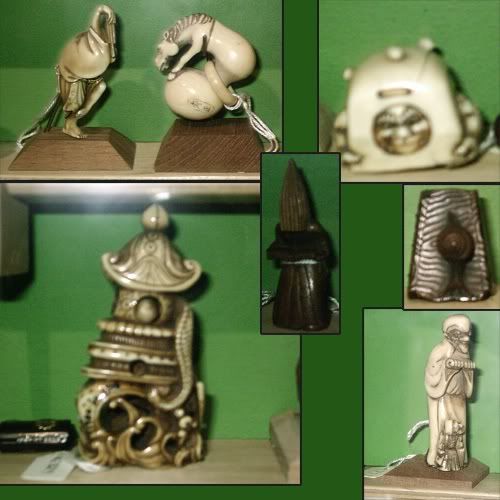
One of my favourite displays in the Pitt concerned Netsuke, an ancient Japanese miniature artform. The result seemed often surreal, even of a Lovecraftian intensity.


After a walk through a scenery reminiscent of Venice, we ended up taking the secret passageway to the Turf Tavern. The talks went on and kept on in the hostel until one by one we finally got to sleep. To sleep, perchance to snore.
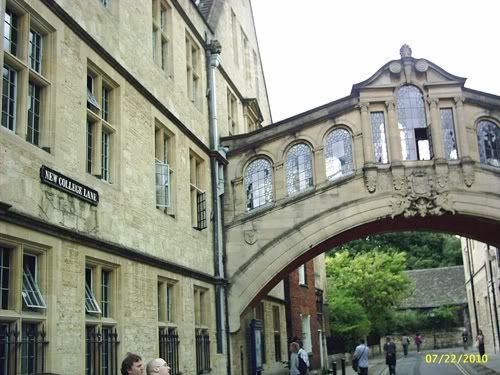


Day Two
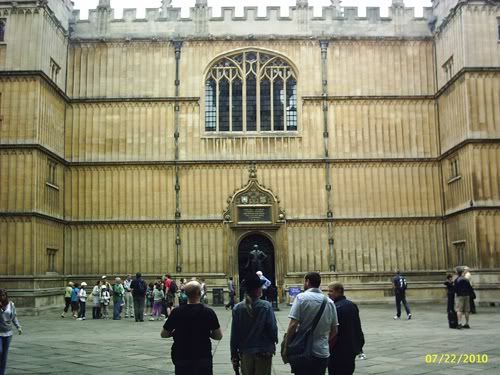
After being reminded by Chris that we'd never manage to take over the world, getting up at about Elevenish and after having lunch we went to visit the Bodleian library. Somehow in metaphysical limbo we seemed to have lost Nonprophet, while actually it was HP who had lost us, and had returned safely to the hostel.
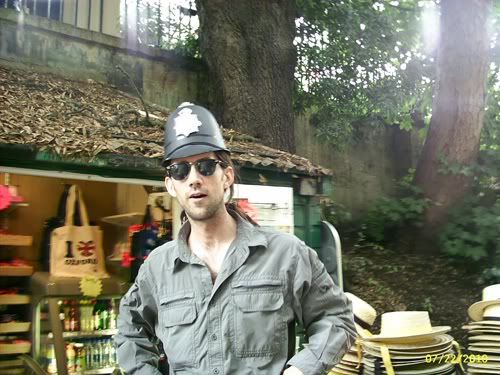
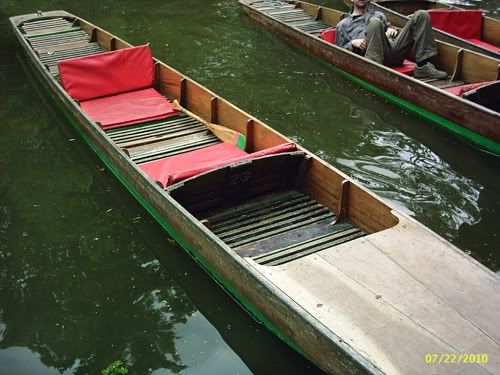
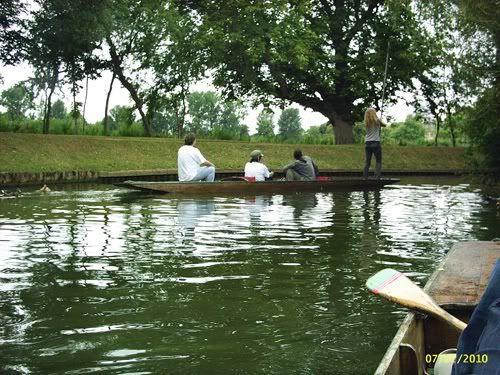


And then they were eight. We had no idea the Agatha Christie reference would turn up to be predominant that day, and we decided to go punting at the Magdalen Bridge.
Two teams tried to move forward. I must admit my catastrophic punting got us left behind by Tons, Diclonius, Fly and The Purple Gooroo, so Chris had to save the day.
Turning a curb and seeing the others moving on, we were suddenly stopped by a guy with a microphone who claimed they were filming a German Miss Marple , and so we had to wait for about 5 minutes. 5 minutes later he repeated the same thing to boats that followed us, and so 5 minutes ended up becoming 30. He did change his story however, ending up telling the last of the row that a fruity person had jumped in the water. We never knew whether this last claim was true, but were able to get past the curb at last and returned to our starting point.
We might have known from our rather dodgy pedalo ride in Milton Keynes a few years ago and with the exception of Fly (whose algae regime helped develop gills) that we're not the floating kind.
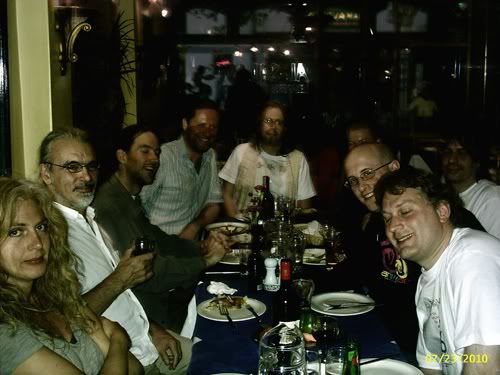
After meeting up with Nonprophet we ended up in the Lebanese restaurant not far from the hostel.From left to right: Tons, Bogus, Fly, Nonprophet, Borsky, Fuzzbuddy, Diclonius, Chris Matthias and The Purple Gooroo.
That night and in order not to wake our sleeping friends, we hadn't turned on the light but used tea candles to be able to see what we were saying.
At about 2 in the morning the fire alarm went off, waking everybody. Of course we hid the evidence. But we weren't to blame: apparently some fruity person had hit the alarm just for fun.


Day Three
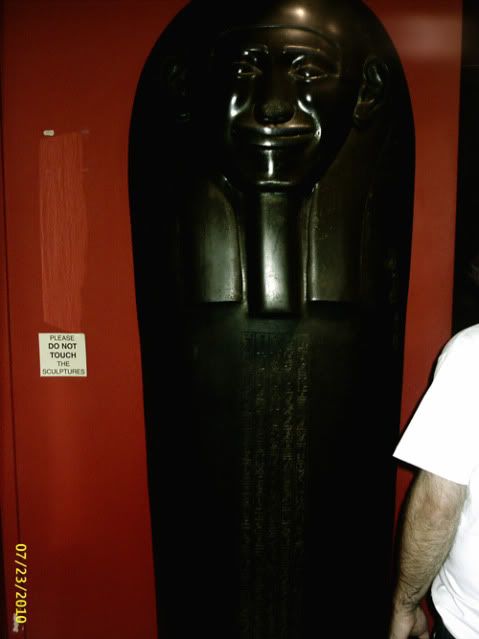
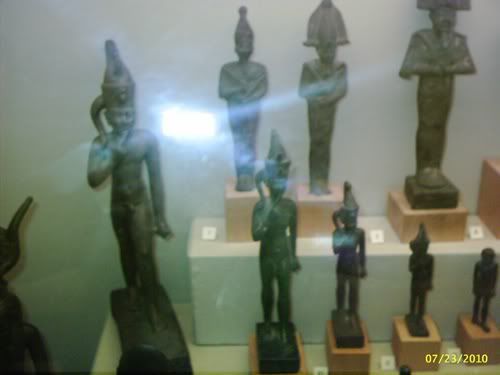
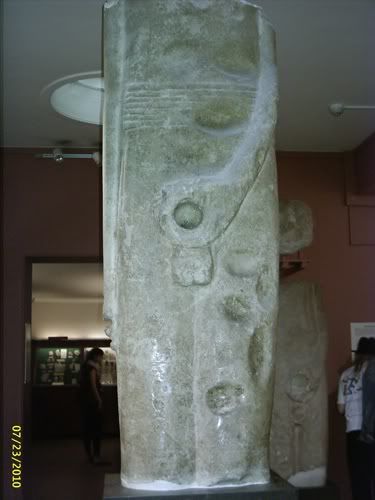
After a slow start (again) we visited the Ashmolean museum, bizarrely renamed 'Asmodeus' by Tons' dark side. Quite a big collection, so we skipped some floors. Below a laughing sarcofagus, some Horii with a hermetic gesture and a large statue of the ithyphallic god Min (whose wooden phallus fell off aeons ago).


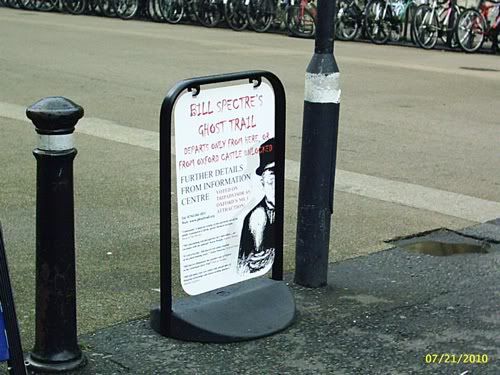
At 6:30 we went to the Oxford castle where for the Bill Spectre (whom we ended up renaming Phil Spectre and who according to Bogus looked like Kryten from Red Dwarf) ghost tour. Our host erroneously claimed a ciseled door inspired CS Lewis 'The Lion, the Witch and the Wardrobe' while it actually is a gorgeous Green Man. En passant he did mention a 'Brazenose Hellfire Club' .
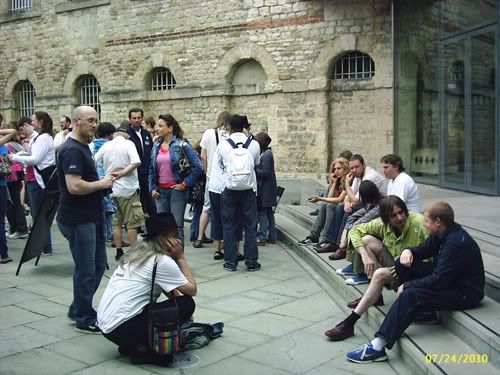
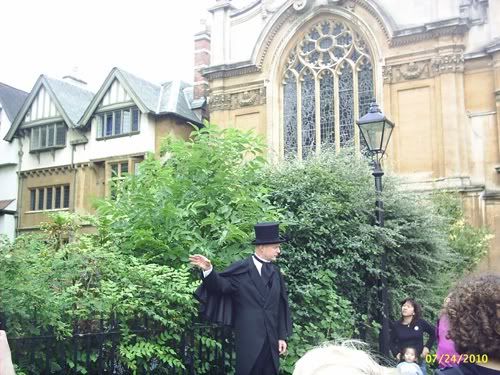
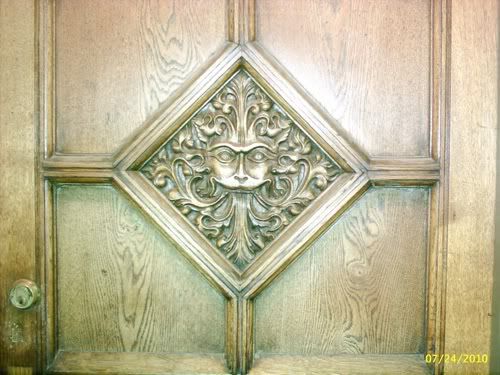


Below are my last pics of the trip (Fly made us realize a real ghost must be the life of the party at the Oxford church meetings). We gathered for the final online meetup that evening in the hostel.

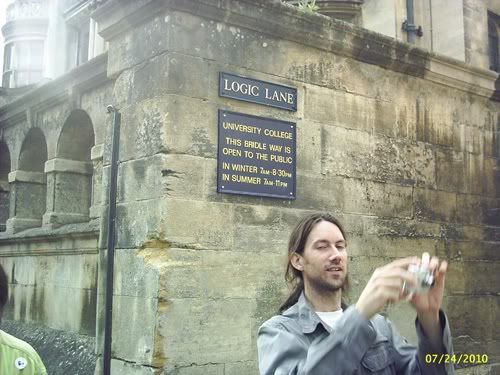



NP had downloaded recording software beforehand so we could archive this meeting for the generations to come.
We managed to have first a video meeting with B.Kane, which was truly great. The reception at our end wasn't very good though, so I apologize for totally misunderstanding what Errol Flynn collectible it was he was so proud to show us. Result of long days in booze and smoke, and a twisted sense of humour. It felt rather surreal sitting there, while Chris and TPG were gone for a pizza, talking to B.Kane and expecting Chris to suddenly pop up behind him. Finally all 9 of us gathered in the microscopic room facing the webcam, B.Kane showing us some of the treasures from his library. After a while we had to put him on hold (sadly skype doesn't permit more than two video chats) when Bobby Campbell entered the virtual room. Strangely the image and audio were much better. Cool to meet for the first time, Bobby. We switched to audio so we could all chat together. Fuzz asked me whether the recorder was on, after which I switched it on… Then everybody started talking at the same time, all I recall is Diclonius' great idea to start a pope group on Facebook.
After the meeting Fly, Fuzz, Bogus and I went to the club for an absinthe (they should really tell the people behind the bar that they should add water!) and for a nightly walk in the park. Slowly turning into a zombie I tried to write down in the fading moonlight some of what then appeared like a bright discussion, but all I can read today looks like a lot of gibberish.
"Gilligan is Terry Gilliam" (Fly)
something about a gig with multiple stages and people wearing headphones (Fly)
"I heard one of your friend's connections cut the hair of Harry Potter" (Fuzz)
something about the movie 'Harvey' with James Steward (Bogus)
"Locker- BP" (Fly)
something about Lady gaga's cock (a running gag for the last couple of days)
and my favourite Fly quote:
"You might feel you're in the crowd, man, but really… you're it!"
Which imho resumes the way we felt during these three wonderful days, a crowd of very different people feeling united by Maybe Logic.


Day Four
All we did on Sunday were goodbyes. We were all fairly tired, I left Oxford with Tons and Nonprophet at noonish, and after a little visit to speaker's corner in London we begged each other farewell. Hopefully we'll find a way to organise video meetings every 23rd, until we meet again IRL maybe next year in Prague, or Stockholm, or Capitola…
Some of us have big projects going on. Tons, I hope somehow I'll be able to read your book once it's published (even if I have to learn German); Fuzz, Fly and Nonprophet, I won't divulge your respective projects but I hope we'll hear more of you soon!

Friday, July 16, 2010

Fresh blood, Hot Links, Good Gravy!

I am happy to pass along word of a new blog dedicated to the lives and ideas of Robert Anton Wilson:
http://rawillumination.blogspot.com

The blog is written by Tom Jackson and offers a daily posting of his RAW thoughts. He even seems to be a fan of our very own DJ Steve Fly Agaric 23!

I'll add the site to the "breaking news" widget in the OM sidebar.

Along similar lines, Bandito recently popped into alt.fan.rawilson to share links to recently archived RAW realist articles.

Another new blog I came across is written by someone called PQ and centers around two of my very favorite subjects: James Joyce & Baseball. http://abuildingroam.blogspot.com/

This blog came to my attention due to the recent interesting conjuncture of Joyce & Baseball when an Umpire named Jim Joyce came to national attention for a blown call that cost a pitcher his perfect game. The story then takes an unexpectedly heartwarming turn and everyone learns a valuable lesson about sportsmanship, honor, and synchronicity. PQ does it a great service in his series on the matter.

Our very own DJ Steve Fly Agaric 23 turns up in this blog as well! Along with a sidebar link to OM's Wings of Art post.

For my own part I'm keeping well busy at the drawing board. Exciting stuff to share soon!

What do you think of the "You Might Also Like" Doohickey I installed? Really kinda opens the place up a bit I think.

Excelsior!

bc

Saturday, June 19, 2010

New Edition of "NATURE'S GOD" by Robert Anton Wilson

"THESE ARE THE EVENTS WHICH WILL SOON RESHAPE THE WORLD..."

Available from New Falcon Publications and Amazon.com

I was actually reading this for my own enjoyment when I got the call to work on the new edition. It was awesome to work on this book as I was reading it. The game got real in Philadelphia!

This was the last book of fiction that RAW wrote, and it totally rules, I hope I did it justice.

"oh, bejesus, Seamus thought, General Washington has been knock-knock-knocking again."

I'm finishing up artwork for "The Earth Will Shake" & "The Widow's Son" this weekend.(Volumes 1 & 2 of the Historical Illuminatus Chronicles) The lasagna remains airborne, Go Phils!

Thursday, June 17, 2010

FINNEGANS WIKI by Mark Pesce

FINNEGANS WIKI


(Stoop) if you are abcedminded, to this claybook, what curios
of signs (please stoop), in this allaphbed! Can you rede (since
We and Thou had it out already) its world? --James Joyce, Finnegans Wake, pg. 18.


Mark Pesce recently released 'the book' version 1.0, of 'share this book': an on-going project (share this course) that a group of web entities and "I" participated in over the last 6 months.

I have taken the liberty here of reproducing and sharing a small part of his text, reproduced from a presentation he made at University Sydney titled 'whatever happened to the book' and a part of particular interest to me, as a budding 'Joycephile' and student of 'maybelogic: the many lives and ideas of Robert Anton Wilson.

I applied a sprinkling of 'hyperlinks' to those already added by Mark, mosbunal link to 'wikipedia' others connect to external sources and 'Joycean' articles, web pages, and some other works by Mark Pesce, thanks, steve: (
http://ataleofatribe.blogspot.com/)


Part Three: Finnegans Wiki.

So what of Aristotle? What does this mean for the narrative?
It is easy to conceive of a world where non-fiction texts simply
dissolve into the universal sea of texts. But what about
stories? From time out of mind we have listened to stories
told by the campfire. The Illiad, The Mahabharata, and
Beowolf held listeners spellbound as the storyteller wove the
tale. For hours at a time we maintained our attention and
focus as the stories that told us who we are and our place in
the world traveled down the generations.
Will we lose all of this? Can narratives stand up against the
centrifugal forces of hypertext? Authors and publishers both
seem assured that whatever happens to non-fiction texts, the
literary text will remain pure and untouched, even as it
becomes a wholly electronic form. The lure of the literary text
is that it takes you on a singular journey, from beginning to
distractions, no interruptions, unless the author has expressly
put them there in order to add tension to the plot. A wellwritten
literary text – and even a poorly-written but wellplotted
‘page-turner’ – has the capacity to hold the reader
tight within the momentum of linearity. Something is a ‘pageturner’
precisely because its forward momentum effectively
blocks the centrifugal force. We occasionally stay up all night
reading a book that we ‘couldn’t put down’, precisely because
of this momentum. It is easy to imagine that every literary
text which doesn’t meet this higher standard of seduction will
simply fail as an electronic book, unable to counter the
overwhelming lure of the medium.

This is something we never encountered with printed books:
until the mid-20th century, the only competition for printed
books was other printed books. Now the entire Web – already
quite alluring and only growing more so – offers itself up in
competition for attention, along with television and films and
podcasts and Facebook and Twitter and everything else that
has so suddenly become a regular feature of our media diet.
How can any text hope to stand against that?

And yet, some do. Children unplugged to read each of the
increasingly-lengthy Harry Potter novels, as teenagers did for
the Twilight series. Adults regularly buy the latest novel by
Dan Brown in numbers that boggle the imagination. None of
this is high literature, but it is literature capable of resisting
all our alluring distractions. This is one path that the book
will follow, one way it will stay true to Aristotle and the
requirements of the narrative arc. We will not lose our
stories, but it may be that, like blockbuster films, they will
become more self-consciously hollow, manipulative, and
broad. That is one direction, a direction literary publishers
will pursue, because that’s where the money lies.

There are two other paths open for literature, nearly
diametrically opposed. The first was taken by JRR Tolkien in
The Lord of the Rings. Although hugely popular, the threebook
series has never been described as a ‘page-turner’, being
too digressive and leisurely, yet, for all that, entirely
captivating. Tolkien imagined a new universe – or rather,
retrieved one from the fragments of Northern European
mythology – and placed his readers squarely within it. And
although readers do finish the book, in a very real sense they
do not leave that universe. The fantasy genre, which Tolkien
single-handedly invented with The Lord of the Rings, sells
tens of millions of books every year, and the universe of
Middle-Earth, the archetypal fantasy world, has become the
playground for millions who want to explore their own
imaginations. Tolkien’s magnum opus lends itself to
hypertext; it is one of the few literary works to come complete
with a set of appendices to deepen the experience of the
universe of the books. Online, the fans of Middle-Earth have
created seemingly endless resources to explore, explain, and
maintain the fantasy. Middle-Earth launches off the page,
driven by its own centrifugal force, its own drive to unpack
itself into a much broader space, both within the reader’s
mind and online, in the collective space of all of the work’s
readers. This is another direction for the book. While every
author will not be a Tolkien, a few authors will work hard to
create a universe so potent and broad that readers will be
tempted to inhabit it. (Some argue that this is the secret of JK
Rowling’s success.)

Finally, there is another path open for the literary text, one
which refuses to ignore the medium that constitutes it, which
embraces all of the ambiguity and multiplicity and liminality
of hypertext. There have been numerous attempts at
hypertext fiction’; nearly all of them have been unreadable
failures. But there is one text which stands apart, both
because it anticipated our current predicament, and because
it chose to embrace its contradictions and dilemmas. The
book was written and published before the digital computer
had been invented, yet even features an innovation which is
Finnegans Wake, and it was Joyce’s deliberate effort to make
each word choice a layered exploration of meaning that gives
the text such power. It should be gibberish, but anyone who
has read Finnegans Wake knows it is precisely the opposite.
The text is overloaded with meaning, so much so that the
mind can’t take it all in. Hypertext has been a help; there are
a few wikis which attempt to make linkages between the text
and its various derived meanings (the maunderings of four
generations of graduate students and Joycephiles), and it may
even be that – in another twenty years or so – the wikis will
begin to encompass much of what Joyce meant. But there is
another possibility. In so fundamentally overloading the text,
implicitly creating a link from every single word to something
else, Joyce wanted to point to where we were headed. In this,
Finnegans Wake could be seen as a type of science fiction, not
a dystopian critique like Aldous Huxley’s Brave New World,
nor the transhumanist apotheosis of Olaf Stapleton’s
Starmaker (both near-contemporary works) but rather a text
that pointed the way to what all texts would become,
performance by example. As texts become electronic, as they
melt and dissolve and link together densely, meaning
multiplies exponentially. Every sentence, and every word in
every sentence, can send you flying in almost any direction.
The tension within this text (there will be only one text) will
make reading an exciting, exhilarating, dizzying experience –
as it is for those who dedicate themselves to Finnegans Wake.

It has been said that all of human culture could be
reconstituted from Finnegans Wake. As our texts become
one, as they become one hyperconnected mass of human
expression, that new thing will become synonymous with
culture. Everything will be there, all strung together. And
that’s what happened to the book.

--MARK PESCE, FUTURE PRESENT(pdf)