Webring

Member of the NEW TRAJECTORIES webring

Friday, April 28, 2006

NewRAW Tarot

Back in April 05 NonProphet suggested making a RAW Tarot along these lines:

A combination of ideograms / thinkers / art work from MLAers - based

Could be based around the eight circuit and Quantum Psychology

Orson, Joyce, Bucky, Leary, Pound, Reich, Buddha, Lao Tse, Emperor Norton, 23, 5, pyramids
Golden and noon blue apples, Sacred Chao, laws of cosmic schmukery, Hagbard... you get my drift

'IS' as the hanged man
Ol' Bob as the Fool
RAW as the Heirophant
Then Bob himself chipped in on 14th April 05
The Marseille Hermit already looks like Bob...

i wd like 93 cards [for thelema and agape]

5 suits [for law of fives]
wands
cups
swords
pentagons
apples

23 trumps
22 as before
+ Sacred chao

Much lively discussion has continued for the best part of a year, mostly suggesting types and characters for a Tarot, like RAW as the Hermit (say) or Emperor Norton as the Emperor – or themes and subjects we would like to see referred to, from Bucky to Korzybski.
Ace of Apples from Bobby
Meanwhile Bobby has started releasing his creations. He offered an Ace of Apples in the forum, in response to Bob’s preference for that as the fifth suit.
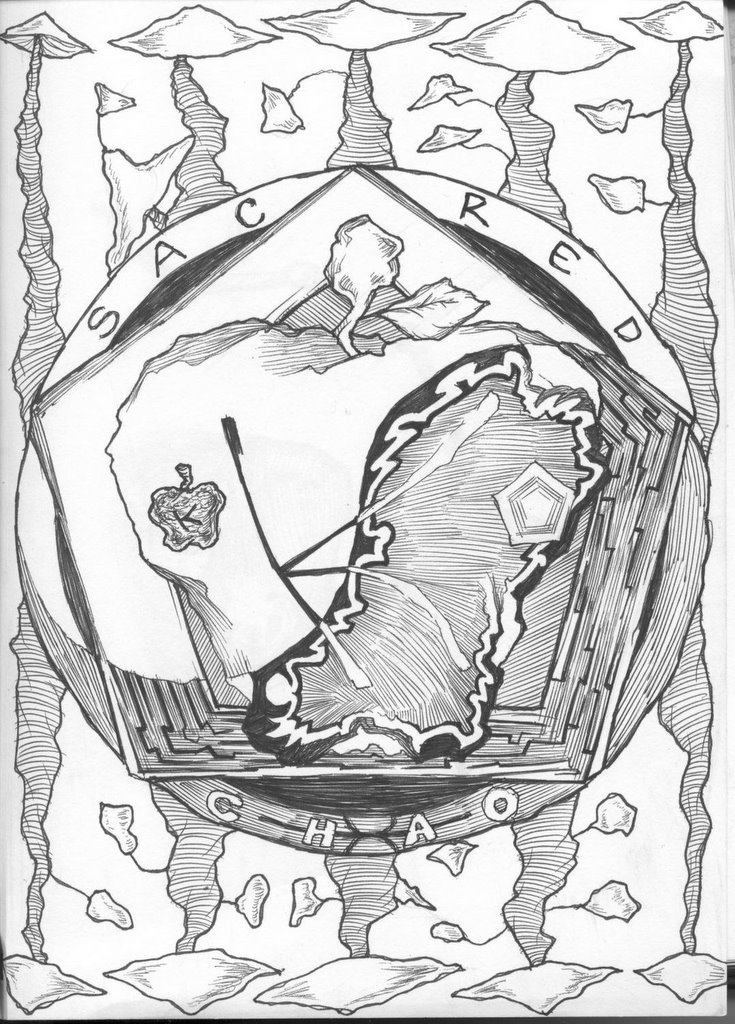
Sacred Chao from Zach
Zach offered a Sacred Chao.


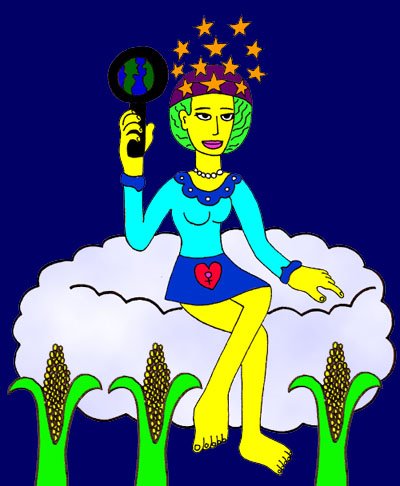
Since then, Bobby has released 4 cards through the OM blog: The Fool, A Magician, The High Priestess and An Empress(just today!)
The Fool from Bobby
Currently Antero Alli approaches the end of his first course here - planning to repeat it in the Autumn (Fall) and in Angel Tech you will find a specific section on Designing Your own Tarot. (check out this article on the NeuroTarot from his website).
A Magician from Bobby
He also offers Vertical Oracle, which you can preview here, for inspiration perhaps? He has encouraged us to make our own set of cards up for the 8 Circuits model. You can see my own work-in-progress here.The High Priestess from Bobby


Throughout the year people contributed some interesting links, some for people who know little about the Tarot, and some for enthusiasts. An Empress from Bobby


Zach recently offered a Moon card in the forum.
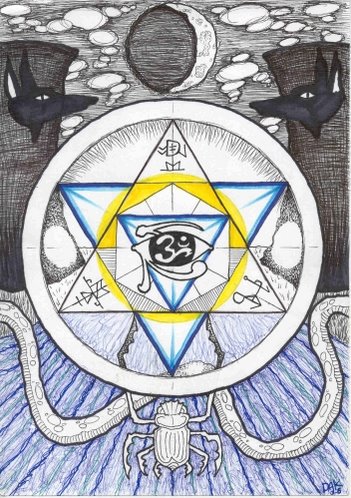
zach's moon
From NonProphet:

Conceptualist Tarot
Le Palais du Tarot
Tarot Reference
Mantegna's Prints in Tarot History
Housewife's Tarot (!)
Magical Omaha

The Collectors: The Love of Tarot
About Tarot

The sarcastic but useful JK site
21. Can I (and should I) design my own Tarot deck?
Can you? Sure. While you at it, go design (or doodle) a starship, or a nuclear reactor, or paint the 21st-century Mona Lisa, or write a great novel or just do something really useful with yourself and cure cancer. Because, if you're just starting out with Tarot, or if you've only been at it using the blind-alley affirmation method, you don't have a clue about what you're doing or what Tarot is about. Isn't that correct? So, why do you figure you'd be any good at designing an example of something you know little or nothing about? But, lots of people do figure just that, aiming to reach the heights by expressing the depths of arrogance and absurdity. And they inevitably end up with muck that only vaguely makes sense even to them. The greatest Tarot deck ever designed, the Thoth deck of Aleister Crowley, was the culmination of a long and interesting life spent absorbing and processing huge amounts of symbolic data. Now, that's what we all do of course, process symbolic data. It's just that some of us are artists at it, and those people not only can but SHOULD make Tarot decks (and that doesn't require a pack of cards), and some of us can't process our way out of a wet paper bag, and those people should spectate (not speculate).

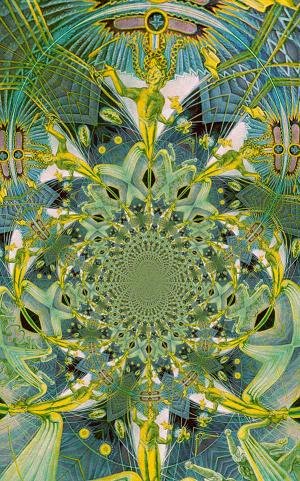
This guy - Lee Heflin - rectified the colours for Crowley’s Thoth Deck, and also did some amazing fractal variations. [2009 update: sadly, the link we had here, to lots of the images, has broken. You can see fragments here. And, for contrast Atu XVII on Flickr

If anyone can find a better online set, then let us know.]

For an exoteric and detailed 'true' history of the Game of Tarot, check out "A Wicked Pack of Cards" and/or other books by Ronald Decker (what a great name for a playing card historian!).

Tuesday, April 25, 2006

God-Free Zone

Mindeterminate - I hope your imminent Saturn Return helps give you bring it all into focus (ask Antero for advice on this, as so few people in Maybe Logic seem to have much time for astrology).

I do understand about the questions of existence, and spent a lot of time with them.
Actually Bobby’s fun entry on Nagarjuna might well offer some insight. Buddhists seem so surely based in experiment and understanding rather than faith and 'belief' that I find them restful.

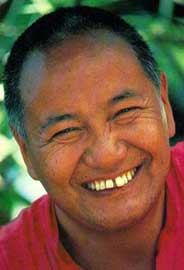
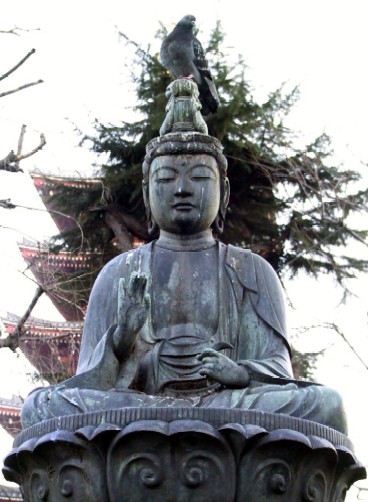
I have not spent any time in Buddhist practice, nor visited the Dalai Lama, etc – and yet I have always felt very close to the tradition. I reserve judgement on the idea of reincarnation, but appeared straight after the last war (shrewd move for a pacifist) and grew up as a vegetarian (thanks to my dad’s Theosophy and my mum’s preference for fresh food), have always had a great empathy with other life forms, and have managed to get through a difficult life with a certain amount of humour (don’t you love the warmth of smiling Tibetan lamas?)

I have certainly always found it hard to believe in a higher being who would create me, make me jump through hoops for a lifetime, and then consign me to a permanent Heaven or Hell based on performance. I find that kind of Judeo-Christian-Muslim God quite incredible and improbable – even though exposed to it as a story through my culture, and educational system. I also find it impossible to discuss, as People of The Book mostly adopt a non-rational position like Father Tertullian who said, "Credo quia absurdum est" or "I believe it because it's absurd," a line worthy of Salvador Dali. You can't argue with that.

I can live with the idea of my simply appearing as a mammal, once, and then leaving.

I can live with the idea that I represent some kind of cycling, open system, reincarnating energy.

My ambivalence about ‘teachers’ and about reincarnation got tested when, in 1986, I got taken to the mountains in Spain, and met a Spanish child, Ösel Hita Torres, reputed to be the reincarnation of Lama Yeshe, a particularly joyous Tibetan monk who had died in California at the age of 49.

The rather solemn young boy I met certainly had an extraordinary presence for someone not yet two years old. I had turned up in my white suit, feeling rather uncomfortable as a sceptic around such reverence, so when he rocked the table and spilled my tea onto my trousers I nearly burst out laughing (I deal with small crisis by laughing quite often) but stayed respectful, like the rather serious people who surrounded him with awe. I later heard that Lama Yeshe had a mischievous sense of humour, and lack of pretension, and this fitted. Of course, I still couldn’t work out if I thought of this as merely a social experiment (give Royal Jelly to an ordinary bee and it turns into a Queen, so perhaps you can teach any child to become a Prince, or a guru). And yet, and yet…

So anyway, I got a blessing. Later that year, the Dalai Lama officially recognised him as a reincarnate.

I don’t dabble in Buddhism, though. I know Alan Watts’ and Christmas Humphreys’ books helped me through a difficult adolescence, simply by letting me know like-minded people existed. I don’t want to experiment with the advanced studies merely from books, as I think far too many Westerners may attempt to do – I believe Lama Yeshe said

"Tantra is not for people who are miserable, because they have no resource of pleasure to utilize."

I don’t even worry about whether I should make an effort to find a teacher, or ‘commit’ to such study. If I need a teacher, and feel ready, they will show up. This worked for me so far.

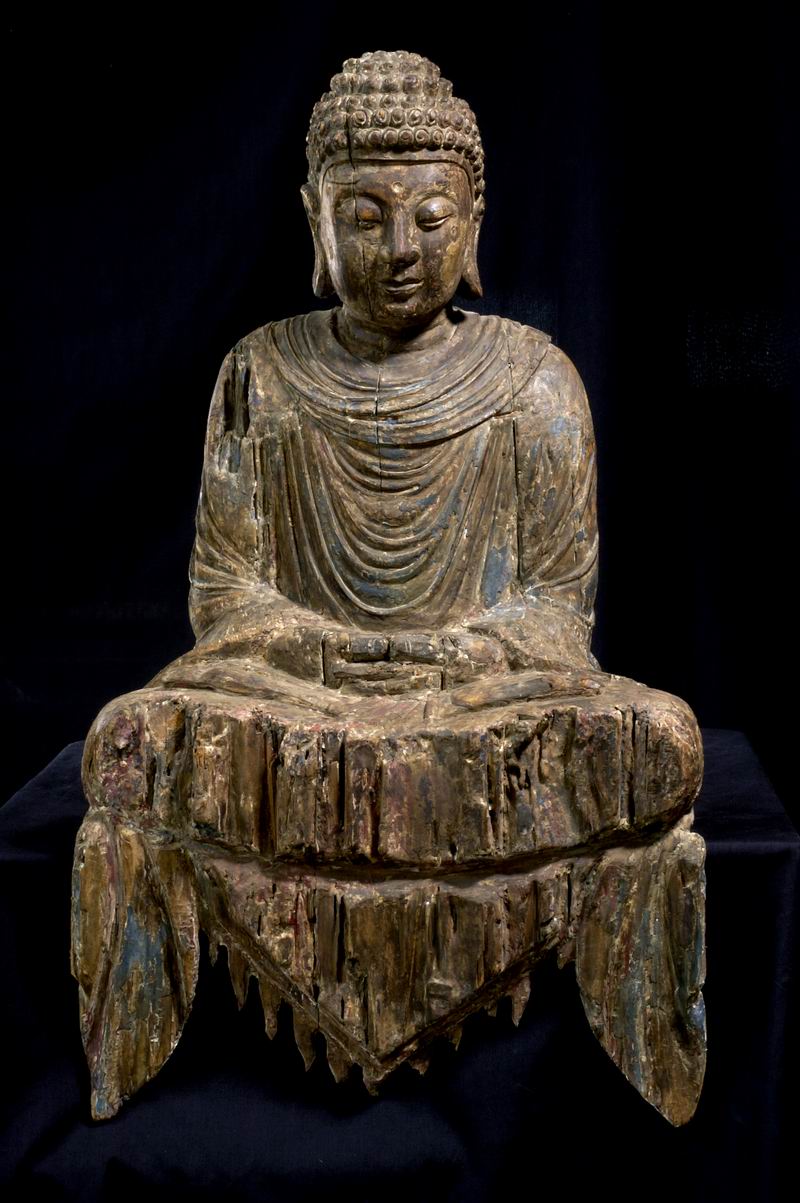
I do like the clarity of instruction from the Buddha (500 years before Jesus, and contemporary of Pythagoras, another vegetarian), however:

"Rely not on the teacher/person, but on the teaching.
Rely not on the words of the teaching, but on the spirit of the words. Rely not on theory, but on experience. Do not believe in anything simply because you have heard it. Do not believe in traditions because they have been handed down for many generations. Do not believe anything because it is spoken and rumoured by many. Do not believe in anything because it is written in your religious books. Do not believe in anything merely on the authority of your teachers and elders. But after observation and analysis, when you find that anything agrees with reason and is conducive to the good and the benefit of one and all, then accept it and live up to it."

That seems so incredibly modern as an outlook – and you don’t have to just take my word for it:


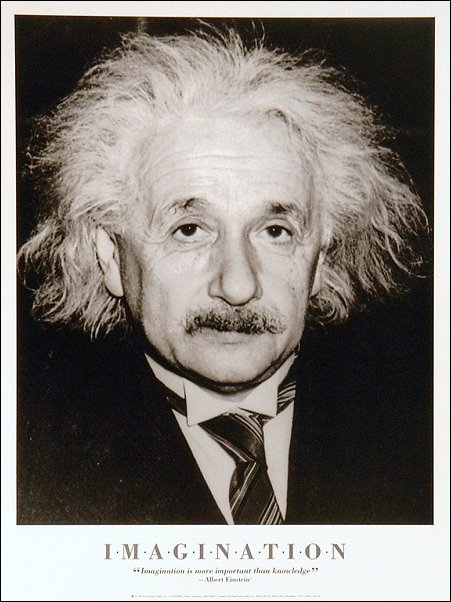
The religion of the future will be a cosmic religion. It should transcend a personal God and avoid dogmas and theology. Covering both the natural and the spiritual, it should be based on a religious sense arising from the experience of all things, natural and spiritual as a meaningful unity. If there is any religion that would cope with modern scientific needs, it would be Buddhism.
Albert Einstein

I suspect that what appeals to scientists (and to me) remains the idea that the world keeps changing and evolving, so we have to keep investigating and checking from our experience. This reminds me of a living language, and a living world. For people who want a ‘final solution’, people who want to ‘be right’ or know ‘the truth’ such ideas seem vague, indecisive and possibly even frightening.

“He [Buddha] also had consistently refused to give conclusive answers to many types of metaphysical questions, as the parable of the arrow shows. However, as the Buddha fully knew, the human tendency to enquire into such intangibilities is practically ineradicable. People were wont to philosophize on even those very subjects about which the Buddha forbade speculation. This inevitably led to differing opinions about the nature of reality. Even some modern scholars have been misled by the Buddha's apparent agnosticism, calling it a "vagueness" in the Buddha's teachings, a vagueness which caused "a great divergence of views" to arise.”

And for those of you young people who find all this as boring as I found Christianity, you might get the same fun and inspiration that I got from Alan Watts (back in 1962) by looking at Dharmapunx and Hardcore Zen.

from your humble correspondent - Godfrey Zone - modelling agnosticism.


a MaYbE state o' mind

Bob sent me down the rabbit hole with the Holy Trinity of Cosmic Trigger, Quantum Psychology, and The New Inquisition.

For the last, oh, seven years or so since I've lived with this general anxiety from being struck by how little I know about what the hell is going on and how "I" ended up here, and where "I" came from, and where "I" will go when this body dies. What am "I" here to do, am "I" on the right path, what should "I" be doing?

I know I could just choose one of the possibilities presented, whether it be the one I rank as highest in probability or the one that's the most fun, but this little voice in the back of my head just goes, "but what if you're wrong?"

One thing I really believe in is this: ANYTHING is possible.

You know how folks say the odds of winning the lottery resemble the odds of being struck by lightning twice? Damn, those are some shitty odds, no way am I throwing my money away on lottery tickets. But on the other hand, people ARE winning the lottery, every week, somewhere, right? I mean, it happens.

So sometimes I sit and contemplate, "What would you do, Min, if Jesus DID show up on the news tomorrow? What if all that fire and brimstone shit happened?" I sit with it and just think, well, if it does happen, no amount of me doing or trying to believe differently about Christianity would have saved my ass, Jesus would see through it all and yell "Nonbeliever!" and toss me into some fiery pit.

So then, when presented with the option to choose, out of all these possibilities, what would I like to invest my energies in?

I sometimes find myself overwhelmed by the sheer number of options to consider. Sometimes I get frustrated. Sometimes I feel small. Sometimes I just laugh my ass off.

I still say, even after 7 years of general disorientation, it sure beats bein' a Pink.

Nagarjuna’s Claim

Wherein: Recursive Neurologic purrs like a honey dew pussy morn & I like totally diss Svabhava.

Von Neumann’s Catastrophe of the Infinite Regress demonstrates that one may never truly remove Quantum Uncertainty from any Measurement, as any measuring device itself operates as a Quantum System with its own Uncertainty.

Additionally: The only measurements we can realistically discuss arrive at our attention by way of the Human Nervous System; and so all forms of Knowledge may find appropriate categorization as Neuro-Knowledge, and since that measurement too comes by way of the Nervous System, it amounts to Neuro-Neuro-Knowledge & that too flows into infinite regress.

The fractal geometry of quantum/neuro epistemology consequentially implies that all systems of thought possess a demonstratable incoherence & irrationality (including this system of thought that suggests all systems of thought as incoherent & irrational.)

Now don’t get it flipped! I totally dig the Buddha; less Tanha (desire) less dukkha (suffering): Klesa Nirodha! but for my $$$, I gotta bring in the slickest of the slick: The Super Jigga Mind: Nagarjuna (the original Mahayanist)

Von Neumann’s Catastrophe reveals an infinite regress of uncertainty due to it utilizing the thinking mind as a tool of measurement. All thinking presumptuously supposes the dualistic categories of “identity” & “difference” (Subject & Object: categories w/out basis) Thinking presumes a demonstratably incoherent abstraction within its very premise; so no wonder the pattern continues through its increasingly complex applications.

Hypostatic Theoretization refers to the phenomena of an abstraction that has gotten concretized to the point of seeming more real than the conditions from which it got abstracted. The permanent independent self (or “Identity”)(according to Nagarjuna) has gotten Hypostatized from the experience of perpetually changing causes & conditions.

Nagarjuna employs a comprehensive method of neutralizing all hypostatic theoretizations; which goes a lil’ something like this:

We understand objects of thought either on their own terms (Definition/Identity) or by their Relationship with other objects.So to conceive of any object X on its own terms or definition would assume the premise of X=X. A Tautology, a useless statement that provides no real information. (Sorry Ms. Rand!) (X)

To define X in relationship with Y leaves us wondering about Y, so we define Y in terms of Z and Z in terms of A and we arrive at an infinite regress that never conclusively defines anything. (Non-X)

Understanding X using both its definition & relations takes us into the murky waters of mutual exclusion, you can’t prove existence by admiting non-existence. (2 Wrongs don’t make a right!?) (Both X and Non-X)

Understanding X using neither its definition nor its relations leaves one understanding nothing at all! (Neither X nor Non X)

X, Non-X, Both, & Neither exhaust all forms of thinking & description, and all have fundamental glitches in their structure, so one may reasonably suppose all linguistic formulations as inherently erroneous?

Nagarjuna proposes the Meme of Emptiness in response to the defects of thought & language. Emptiness, not in the sense of non-existence or void, but rather the absence of Svabhava ( self essence ) Meaning specifically that we do not create ourselves, nor do we possess an independent, permanent (Closed System) existence. [See Ernest Becker Re: The inborn human desire to create themselves (The Causi Suri Project) and the futility thereof.]

Appropriately enough the Sanskrit for Emptiness; Sunyata also means “Shhhhh!” or as I learned it: “SHUT UP!!!” Suggesting maybe an interplay betwixt apprehending our “Identity” and arousing mental chatter/recursive conceptual formulation?Pratityasamutpada supposes that since all objects arise dependant on all other objects, No Object possesses an invariant closed system identity & since everything arises dependant on perpetually changing causes and conditions; still further: everything remains “empty” of self-nature (Open System)

Debate has continued since the first century in regards to whether or not Nagarjuna’s claim that all claims have no meaning itself counts as a claim without meaning...personally I don’t give a fuck!

A set of propositions cannot contain itself without generating paradox and "nonsense"[Russell & Whithead, Principia Mathematica]

Therefore, Nagarjuna's 4-valued logic either does not include itself
or it leads to Zen koans, Nasrudin jokes and Monty Python routines

[I like it either way]

Monday, April 24, 2006

And I'm Alright

go or stay, I see and am


who I am


and Im alright with this peculiar thing
that’s happening


Things are happen ing


happen

happenstance
happenslouch

happenhappenin’ mystery